
The past 11 years have been the hottest on record – Expert Reaction
23 March 2026
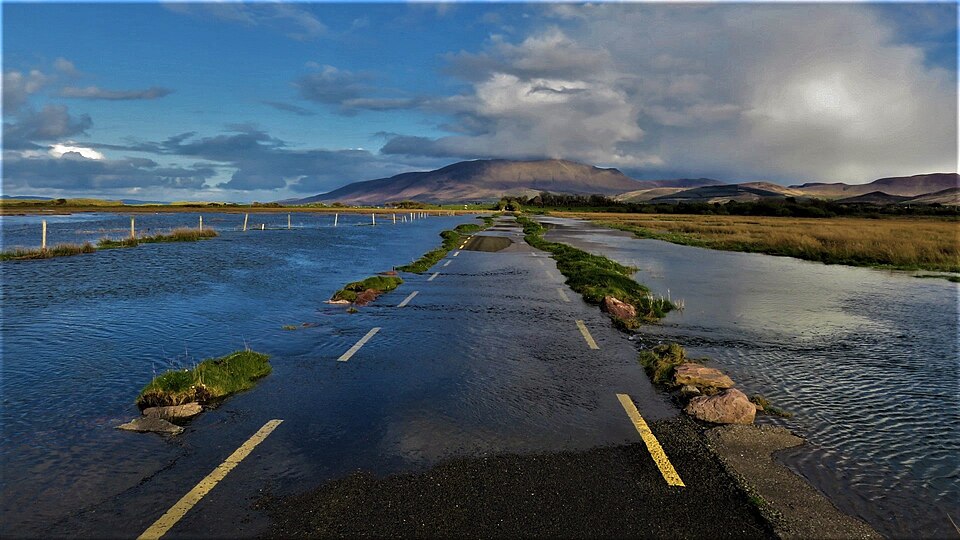
Tidal flooding on Dingle Peninsula by Maoileann via Wikimedia commons
The World Meteorological Organisation has confirmed 2015-2025 as the hottest 11 years on record, with 2025 as the second or third hottest year on record, at about 1.43 °C above the 1850-1900 average.
The annual report points out plummeting glacier and sea ice, rising sea levels, increasing ocean heat and acidity, and the devastation of extreme weather events.
The All Ireland SMC asked local experts to comment.
Professor Iris Möller, Coastal Geomorphologist, Trinity College Dublin, comments:
“The WMO’s State of the Global Climate report 2025 is another reminder of the extent to which we as humans have altered the state of our planet’s life support systems. It also highlights how tightly our atmosphere, oceans, and land surfaces are interconnected.
“The fact that the oceans have been absorbing so much of the excess heat has regulated our land surface temperatures somewhat. But this has come at a price: warmer water expands – and this is what has contributed, alongside the additional meltwater from land-based ice, to sea level rise. With atmospheric warming exceeding the 1.5 C threshold over the course of this century, sea level rise is likely to exceed the 0.26-0.77 m range by 2100.
“We have ample evidence for the naturally adaptive capacity of our coastlines as they have dynamically responded to past geological episodes during which sea levels have been both higher and lower than at present – but there has been no time in the past when we have built so close to the coast and in such low lying areas and where so many people have been at risk.
“When our coastal waters deepen, the cost of maintaining our engineered defences to keep us safe will escalate, as waves dissipate their energy less in deeper water.
“As the energy of storms and associated waves will also rise in a warmer world and our engineered defences have interfered with the natural circulation of sediment, our soft coastal cliffs, beaches, and dunes, become all the more vulnerable to erosion. Storm Chandra in February showed us the consequences of intense rainfall on a highly modified landscape. If it had occurred during a high spring tide, the situation would have been many times worse in coastal towns and cities, including Dublin.
“The state of the global climate suggests that it is only a matter of time before we see this combination of extreme river and coastal flooding on the Irish east coast. We must urgently implement a range of measures to deal with this risk via nature-based solutions, coastal protection measures, and emergency evacuation processes, as well as radically switching away from fossil fuels.”
Declaration of interests: Professor Möller declares no conflicts of interest