
Nuclear energy bill seeks to lift Irish ban – Expert Reaction
06 May 2026
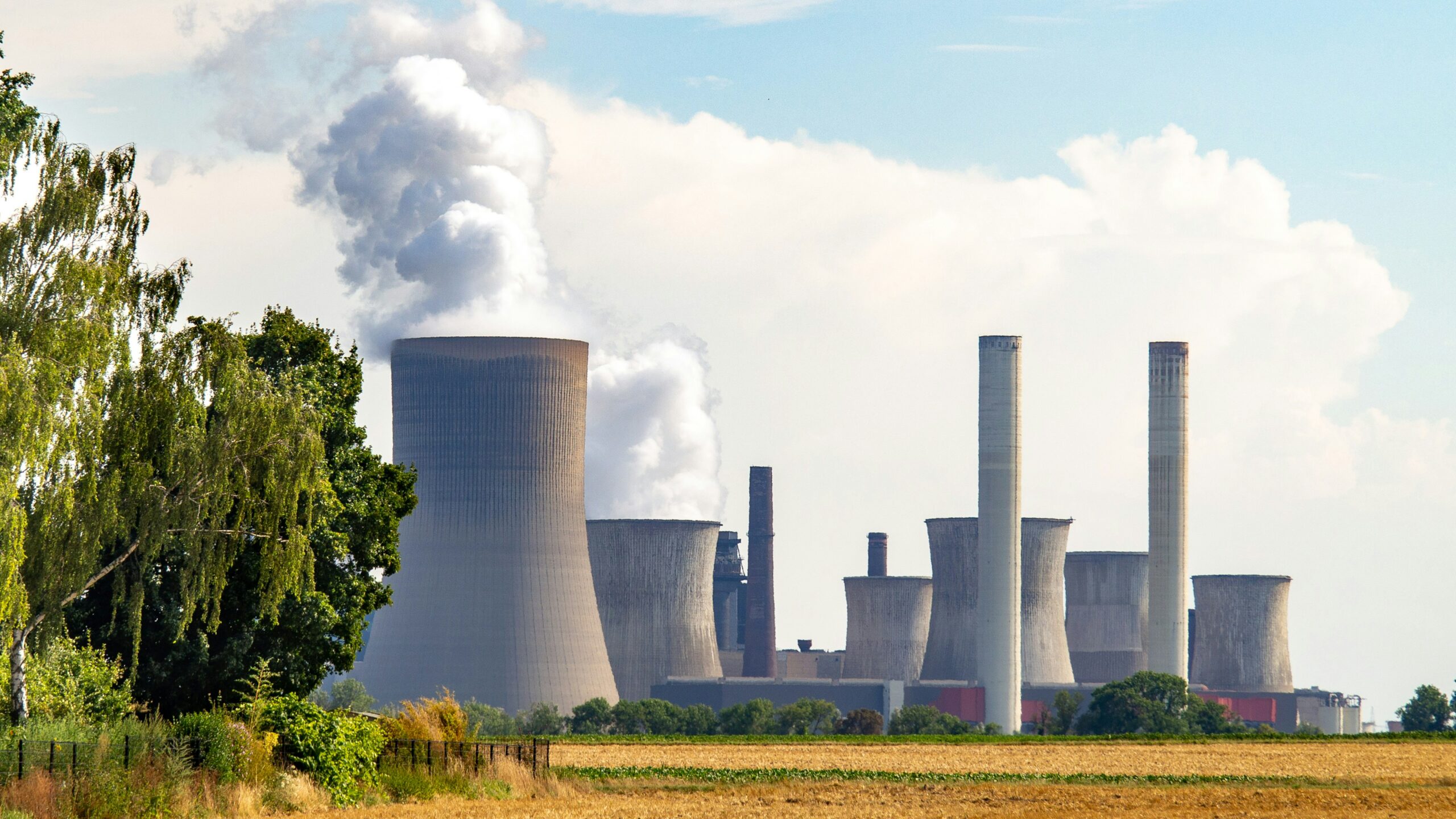
Powerplant in Niederaußem Germany, image by Wim van't Einde via UnSplash
Fianna Fáil has introduced a bill to reverse the ban on nuclear energy in the Republic of Ireland.
The Electricity Regulation (Removal of Nuclear Fission Prohibitions) Bill 2026 has been drafted and submitted to the Oireachtas Bills Office, and will be debated by TDs in the Dáil within the next six months.
The All Ireland SMC asked local experts to comment.
Dr Barry Hayes, Associate Professor in Electrical Power Systems, University College Cork, comments:
“Our immediate focus in Ireland needs to be kept on the delivery of our already-planned energy infrastructure projects. This includes a massive expansion of offshore wind, a major upgrade of our electricity grid, and new subsea electricity interconnectors. This is the only way we will improve our energy security and reduce our electricity costs in the next 10-15 years. Building nuclear generation in Ireland would be a very long-term project, and as critics rightly point out, the cost and planning challenges would be enormous.
“That said, the case for reopening the debate on nuclear has never been stronger. We already import nuclear-generated electricity from Britain and will soon import much more of this from France, so the ideological ban on nuclear makes no sense. Reversing the ban on nuclear energy in Ireland doesn’t mean building a nuclear plant tomorrow, but it would help to keep our options open, and would hopefully allow for a mature and evidence-based debate.”
Declaration of interest: No conflicts to declare
Dr Rory Monaghan, Professor in Energy Systems Engineering, University of Galway, comments
“Lifting of ban is welcome but that doesn’t mean nuclear is the answer for Ireland.
“A bill has been introduced to reverse the ban on nuclear power generation in Ireland. The passing of this bill should be warmly welcomed. No clean energy technology that has been shown to operate safely and stably in other European countries should be banned in Ireland. However, supporting the lifting of the ban and seeing a realistic role for nuclear in Ireland’s energy future are very different things.
“Traditional tried and trusted pressurised water nuclear power plants are enormous in terms of power output. The UK’s next nuclear plant, Hinkley Point C, will generate electricity roughly equal to half of Ireland’s current peak demand. While this sounds like an advantage, having so much of power demand depend on one plant is risky and would require significant fallback sources of power. The cost of building a new pressurised water power plant is eye-watering. The UK government had to agree to pay the operators of Hinkley Point C far above the wholesale electricity rate for 35 years to get the plant build. The argument in favour of the UK doing this is that the plant after Hinkley Point, and after that again, will get progressively cheaper as the UK relearns how to build nuclear plants. Given Ireland’s small size, this argument does not apply here.
“New Small Modular Reactors (SMRs) are under development and many hope their smaller, mass-manufactured, factory-built reactors will reduce the need for redundancy and complexity, and could be an all-round better fit for small countries. They could theoretically be built close to cities and could provide cheap district heating as well as power, but SMRs are in the early stages of commercial roll-out so the economics of their real-world operation are yet to be proven. Regardless of whether Ireland were to build large traditional nuclear or SMRs, we would have to build our engineering, regulatory, legal, and policy expertise from an effective base of zero, which will take time.
“What is Ireland’s unique selling point for energy? It is obviously wind, both onshore and offshore, but also surprisingly, solar. What Ireland lacks in sunlight, we partially make up for in daylight hours for 6 months of the year. Once built, and their costs have tumbled in the recent decades, wind and solar have extremely low operating costs reflected in lower prices when they are the dominant sources of electricity. They also complement each other in that it can frequently be windy and not sunny, and vice versa. The problem is the variability of their output and for that, we need backup power generation, energy storage, and interconnection to other countries. Could nuclear provide that backup power? Possibly, but it would be an extremely expensive backup. Nuclear is more capital intensive than nearly any other power source, meaning it needs to be run as much as possible to deliver adequate return on investment. This is not compatible with a power system dominated by variable renewable energy.
“Ireland would be much better served continuing to build our excellent renewable resources, expand battery storage to cover hourly shortfalls, build more interconnectors to our neighbours, including nuclear-powered France and UK, to exchange power when needed. The missing piece of the puzzle is ultra-long duration or seasonal energy storage and one possible solution is hydrogen, made by electrolysis powered by excess renewable energy, and stored until needed. This will be an expensive fuel, but it can be burned in cheap gas turbine power plants, the same ones we currently fuel with fossil natural gas, likely resulting in electricity prices far lower than if we pursued nuclear.
“By all means, remove the ban on nuclear. But let’s play to our strengths, let our nuclear-powered neighbours play to theirs, and balance supply and demand through batteries, hydrogen and interconnection.”
Declarations of interest: Coordinator of the SH2AMROCK Hydrogen Valley and Member of the Board of Directors of Hydrogen Ireland
Associate Professor Paul Cuffe, School of Electrical and Electronic Engineering, University College Dublin, comments:
“I welcome this debate. Nuclear power is a green technology; it is totally carbon-free and it doesn’t warm the climate. It is unfairly maligned, and it has been for decades. France wisely embraced it and now they produce lots of cheap, clean, safe, reliable electricity for their citizens to enjoy.
“There is nothing immoral about using electricity; it is only problematic if it pollutes the atmosphere. Nuclear doesn’t. The data centre that streams you your Netflix binge needs electricity. So does a twenty-minute shower. We could have enjoyed all that abundance guilt-free with nuclear power, but like most of the world, we chose the wrong future.
“This is why Germany’s decision to phase out nuclear power was so foolish. They had done all the hard work. They had a functioning nuclear fleet and they wound it down in 2023 out of ideological vanity. A sad act of national self-harm, a total own-goal. They shut down working power stations, dirtied their own atmosphere, and pushed themselves into the arms of oligarchs for gas. A wealthy, sophisticated country let fear override evidence, and now their people are paying the price.
“Should Ireland start building nuclear power plants? I wish I could say yes to that without hesitation. I’m such a fan of the technology in principle. Do I believe, though, that we have the national wherewithal to pull off such a project? It’s hard to be optimistic. We can’t build something as simple and uncontroversial as a children’s hospital. Every infrastructure project gets bogged down in decades of legal wrangling: every fifteen metres of planned motorway seems to disturb some new species of rare snail.
“So, I applaud the Government for proposing the removal of the ban, and I would call on them to pull that thread all the way. How do we become the sort of bold, ambitious, technocratic, optimistic country that can actually pull off an audacious project like rolling out a fleet of new nuclear power plants? How do we roll back fifty years of accumulated legal precedent, well-intentioned environmental legislation, and planning paralysis that have left us too weak to build anything cool and ambitious? Answer that question and I’m all in: build a reactor in my back garden. But until then, the pragmatist in me says we should hold off.”
Declaration of interest: I declare no conflicts of interest
Claire Gallery-Strong MBE FRSC FNucI, nuclear energy expert, comments:
“Lifting Ireland’s ban on nuclear energy would reopen an important strategic option for the country’s future energy system. Across Europe, many countries already use nuclear power alongside renewables to support security of energy supply and deliver low carbon electricity to help tackle climate change.Removing the ban would allow Ireland to evaluate modern nuclear technologies, including small modular reactors, and better understand the infrastructure, skills and regulatory approaches that would be needed if Ireland chose to explore nuclear further in the future.Nuclear is not the only answer, but many countries now see it as part of the energy mix.
“Modern nuclear systems have evolved significantly over recent decades. Safety is very much at the heart of how the industry operates, with modern reactors engineered with multiple systems designed to minimise risk, drawing on decades of operational learning and international best practice. Radioactive waste is also considered from the outset rather than as an afterthought. The challenge of radioactive waste is real, but it is technically well understood and carefully managed using established approaches developed over many years of international experience.”
Conflict of interest statement: Claire Gallery-Strong MBE FRSC FNucI works in the UK nuclear sector and has held senior leadership roles relating to radioactive waste management and nuclear operations.