
New type of ‘body clock’ depression identified in 1 in 4 patients – Expert Reaction
21 October 2026
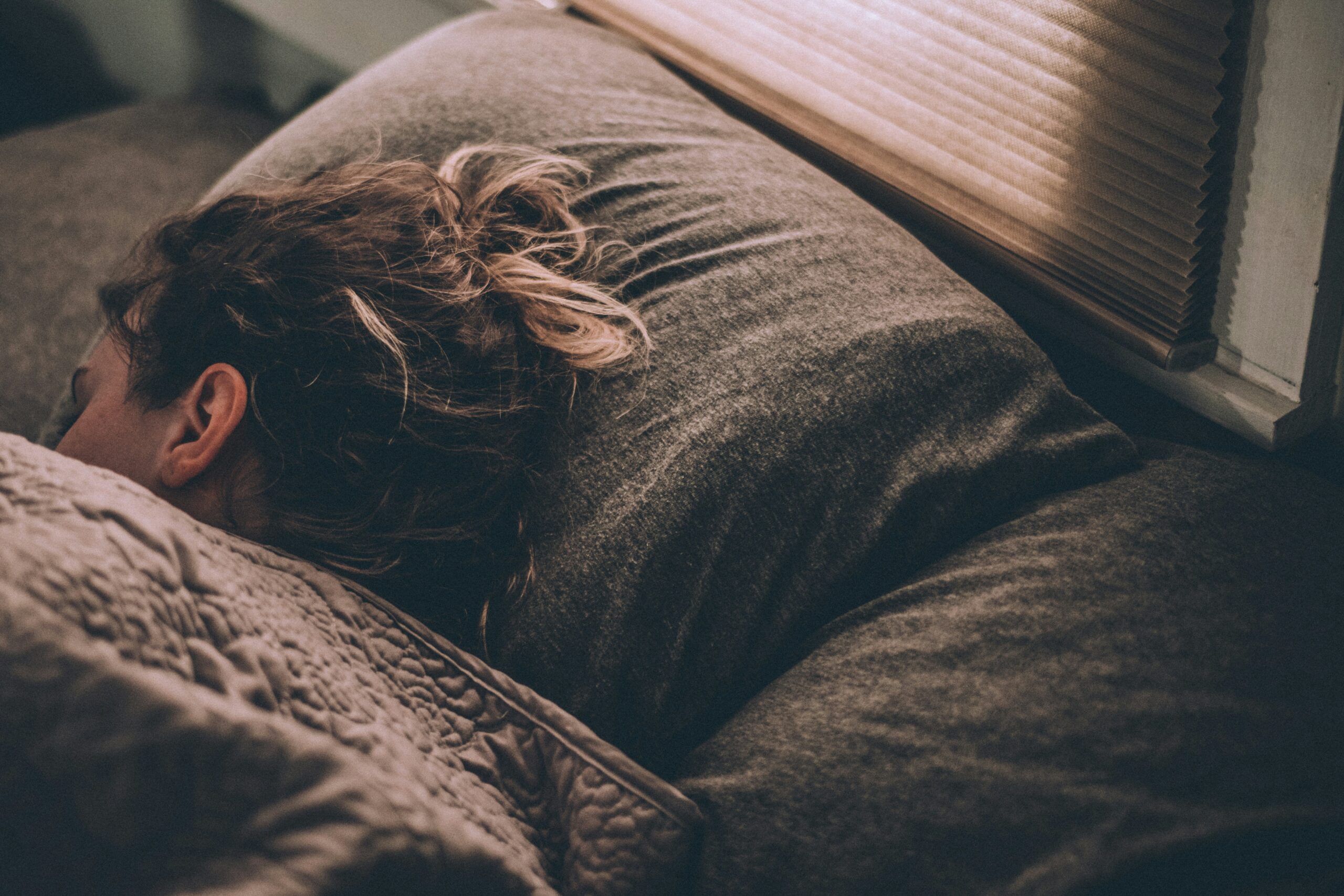
Image by Greg Pappas via UnSplash
An Australian research group has identified a subtype of depression linked to the body’s internal clock, which regulates our sleep-wake cycle.
Researchers used clinical and genetic data from more than 10,000 people with depressive disorders and found that nearly a quarter had a subtype they called “circadian depression”. This was defined as having least three of six features; being a night owl, sleeping longer, sleeping later, morning tiredness, seasonal mood changes, and big differences in sleep times on workdays and weekends. Those in the group were more likely to have more severe symptoms, poorer responses to antidepressants, and experience depression onset at a younger age.
The All Ireland Science Media Centre asked experts to comment.
Dr Pádraic Dunne, Senior Lecturer and Principal Investigator, Centre for Positive Health Sciences, University of Medicine and Health Sciences, comments:
“Depression is not the same for everyone, and this study by Tonini and colleagues, suggests that differences in our internal body clocks might help explain why some people experience more severe symptoms or respond differently to treatment.
“Researchers examined data from 11,380 Australian adults with a history of depression. They identified 2,604 participants (23%) with signs that suggested a disruption to their circadian rhythms, the internal biological processes that regulate our sleep and waking patterns over a typical 24 hour period.
“Analysis of the data indicated that individuals with sleep disruption experienced earlier onset of depression, and more severe mental health-related symptoms. Some participants also had poorer responses to prescribed antidepressant medication. Interestingly, genetic analyses also revealed associations with sleep patterns and biological processes linked to metabolism (energy systems in the body) and inflammation (activated immune responses).
“The study is interesting because it moves beyond treating depression as a single condition and explores whether different biological profiles might help inform treatment.
“However, we should be cautious interpreting the data. The research relied heavily on self-reported information, and its cross-sectional design cannot establish cause and effect (i.e., they can’t categorically state that poor sleep is the cause of increased depression-like systems in some people; only that they are associated). The findings also require confirmation in more diverse populations. For example, the study cohort was restricted to those of European ancestry and the majority of participants were women.
“Regardless, this is an important study with a large population that offers a promising direction for more personalised approaches to depression care, which is badly needed.”
Declaration of interest: I am employed by RCSI University of Medicine and Health Sciences and receive research funding through academic grants, including collaborative projects involving industry partners. My research focuses on Positive Health Sciences, lifestyle medicine, and positive health coaching. I have no additional relevant financial or personal interests to declare.
Professor Andrew Coogan, Department of Psychology, Maynooth University, comments:
“The paper by Tonini et al use data from a large genetic study of depression in young adults to propose a circadian subtype of depression characterised by a cluster of features including later circadian rhythms, sleeping more and more morning tiredness. The participants with this proposed subtype of depression were more likely to be younger at time of symptom onset and to be female and were more likely to have psychotic-like symptoms.
“We have known for a long time that major depression is linked to changes in the body clock that make people later to bed and later to rise so the findings are not overly surprising. Some criticisms would include lack of detail as to how the cluster of features of, and the criteria for, the proposed circadian subtype of depression was arrived at; for example hypersomnia (sleeping more) is not to my mind a clear circadian feature but is included in the symptom cluster. Another weakness is that there was no replication of the findings in an alternative sample, which would increase confidence in the findings. As such, the results of this exploratory study are best interpreted as initial if interesting findings that warrant further examination.
“The study highlights that treatments for depression could be designed around a person’s body clock. This approach is called chronotherapy, and I would be very interested to see follow up studies on whether chronotherapy has a better anti-depressant response in people with this proposed subtype of depression”
Declaration of interest: No COIs to declare.
Dr Ronan Lordan, Senior Postdoctoral Fellow, School of Pharmacy and Biomolecular Sciences, RCSI, comments:
“I think Tonini et al. provide encouraging, albeit preliminary, evidence for a potentially clinically relevant circadian profile of depression. This builds on existing evidence that circadian rhythms play a role in bipolar disorder and major depressive disorder (MDD).
“The study has several strengths. It’s a large study, and it shows that people in this subgroup have a cluster of similar characteristics, including clinical features and genes associated with being a night owl and sleeping late. They also reported a modestly poorer response to antidepressants. However, because the subgroup was defined by “eveningness” and delayed sleep timing, it is not surprising that they carry genes for eveningness and delayed sleep timing. That means these genetic associations do not independently establish a distinct biological subtype of depression. It also remains uncertain how clearly this profile can be distinguished from overlapping clinical presentations.
“The SSRI findings are particularly interesting, but need careful interpretation. The study was cross-sectional and relied on retrospective self-reported treatment response, so it cannot establish treatment resistance or show that alternatives would be more effective. The classification also relied on self-reported sleep–wake characteristics rather than direct physiological measures of circadian function.
“One intriguing possibility is that circadian timing influences serotonergic function. Preclinical research suggests that serotonin transporter activity varies depending on the time of day, raising questions about whether circadian disruption or treatment timing influences antidepressant effects. However, this remains speculative in the context of the present findings.
“Women were somewhat overrepresented in the circadian subgroup (80% versus 73%), although the cohort overall was predominantly female. Clinically, these findings reinforce the importance of assessing sleep–wake patterns, but are not sufficient to justify changes to prescribing practice in Ireland.
“Ultimately, this research may help move us towards more personalised depression treatment, provided the findings are independently replicated and the profile prospectively predicts treatment outcomes.
“Overall, this is a really interesting paper that gives us further reason to consider the circadian clock’s role in mood disorders, while highlighting how much we still need to understand before translating these findings into clinical practice.”
Declaration of interest: “I am funded by European Union’s Horizon Europe research and innovation program under Marie Skłodowska–Curie grant agreement 101179447 (M1NDRHYTHM).”
Our friends at the UK Science Media Centre also gathered comments
Prof David Curtis, Honorary Professor, UCL Genetics Institute, University College London (UCL), said:
“I do not see that this paper identifies a novel subtype of depression. While typical features of severe depression include weight loss and early morning waking, for many decades psychiatrists have recognised that some patients present with atypical features including weight gain, sleep delay and increased sleep. This paper selects patients who tend to have features which partially overlap with those associated with atypical depression. Depressed patients present with a variety of different symptoms and selecting some who report particular symptoms does not mean that one has identified a new subtype of depression. These patients are not qualitatively distinct from others who have more typical symptoms.
“Patients who reported three or more of these features tend to have more severe illness and to respond less well to SSRI and SNRI antidepressants. The paper does not present any evidence that any alternative approaches to treatment would be more effective.
“I have to add that I find the term “circadian subtype” misleading. The word “circadian” refers to patterns associated with the 24-hour day. Some typical features of depression are circadian in nature, including early morning waking and having worse mood in the morning. The authors seem to be using the term “circadian subtype” to refer to patients with depression who tend to go to sleep later and wake later while still feeling tired. I do not think this terminology is particularly helpful. One could equally well say that patients with the typical features of depression have “circadian depression”.”
Declaration of interest
* Emiliana Tonini et al. Clinical and genetic correlates of a circadian subtype of depression in the Australian Genetics of Depression Study. The British Journal of Psychiatry http://dx.doi.org/10.1192/bjp.2026.10798 was published at 00:01am Irish/UK time, Wednesday 21 October 2026