
Ireland poorly prepared for prolonged global fuel disruption – Expert Reaction
10 March 2026
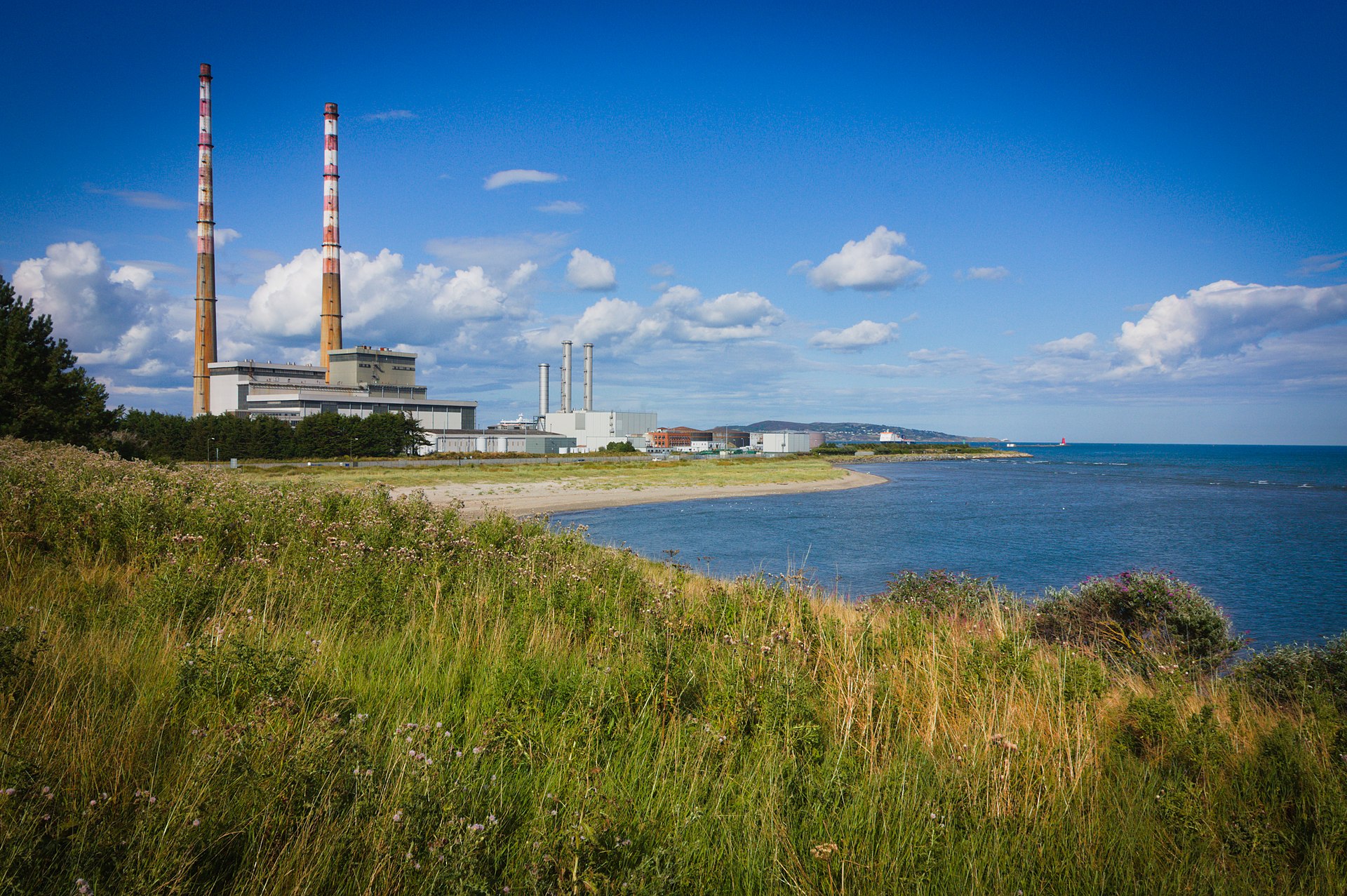
Poolbeg Generating Station by Maciej Brencz via Wikimedia commons
Escalating conflict in the Middle East has triggered spikes in global oil and gas prices, raising concerns about fuel supply disruption and energy security.
The All Ireland SMC asked experts to comment on how Ireland’s reliance on imported fossil fuels and limited fuel storage affects our energy system resilience.
Dr Barry Hayes, Associate Professor in Electrical Power Systems, University College Cork, comments:
- How prepared is the Republic of Ireland for a prolonged disruption in global fuel supplies?
“We are not well prepared for a prolonged disruption. Ireland is more dependent on imported fossil fuels than most other European nations. Due to our peripheral location on the northwestern edge of Europe, we are at the end of many fossil fuel supply lines, making us particularly vulnerable to prolonged disruption.”
- What parts of our energy system are most vulnerable to global fuel disruptions?
“We rely heavily on imported oil and natural gas for heating, and we rely almost completely on imported oil for transport. We also use (mostly imported) gas for electricity generation, with around 40% of our total electricity generation coming from gas. Any shock to global fuel supplies will therefore impact on multiple sectors in Ireland. We saw this during Russia’s full-scale invasion of Ukraine in 2022, where international gas market prices soared. This also had a massive knock-on effect on electricity prices in Ireland, with wholesale prices reaching four times their normal levels and huge price increases for all electricity customers.”
- What energy system changes could make the Republic of Ireland more resilient to shocks?
“We need to accelerate our energy transition and deliver on our existing decarbonisation goals. We need to clean up our electricity grid and then electrify transport and heating as soon as possible. Already we can see that wholesale electricity prices are significantly lower on windy days than on non-windy days (when we have to burn more imported gas). International gas markets are the main factor driving electricity prices in Ireland. Every kWh of electrical energy that we generate from clean, renewable sources within our borders is a kWh that we do not need to import, reducing our exposure to volatile international energy markets and making us more resilient to shocks.”
Declaration of interest: I have no conflicts of interest to declare.
Dr Rory Monaghan, Lecturer of Mechanical Engineering, College of Engineering and Informatics University of Galway, comments:
- How prepared is the Republic of Ireland for a prolonged disruption in global fuel supplies?
“We’re uniquely vulnerable in Ireland because we’ve got one of the highest levels of energy import dependency in the EU. We have no oil reserves and we have one gas field, and when we import energy, we’re generally importing from a limited number of suppliers. From a gas point of view, we import solely from the UK. So if there’s a disruption in that pipeline from the UK, or within the UK, that would impact us severely.
“The National Oil Reserves Agency (NORA) is mandated to hold 90 days of oil supplies for Ireland. It owns some of those supplies within Ireland, and it also holds some of those supplies in other European countries that have agreed to store oil for us. However, some of those reserves are held on contracts that mean Ireland is able to buy that oil at the market price at the time. So while it is our legal right to have that oil, it could be bought at a very expensive price.
“Oil is obviously an incredibly important fuel. Our transportation system runs almost exclusively on oil, and our heating systems in Ireland are very oil dependent. But we don’t use a lot of oil for generating electricity. A lot of our electricity generation — the portion that’s not coming from renewables — by and large comes from natural gas. So storage of oil will have a limited impact on our ability to keep electricity being generated. That’s why government plans to build up a strategic store of natural gas are extremely important from an electricity supply security perspective.”
- What energy system changes could make the Republic of Ireland more resilient to shocks?
“We have been very successful in building up our renewable generating supplies, and they’re excellent from a decarbonisation point of view. But they are not what’s called dispatchable; we can’t always rely on them to be there, so renewables need to be coupled with energy storage, but we don’t yet have that storage in place at scale.
“Increasing our ability to store of renewable energy would increase our resilience and insulate us from supply shocks on the global market. But it will be extremely expensive to build up that amount of storage for energy resources that are, by their nature, very variable.
“There are short-term supply–demand imbalances that storage can solve through technologies like batteries. Batteries are excellent for storing energy over minutes to hours. Other technologies, like pumping water up and down hills, can store energy for hours to days. But we don’t yet have commercially available technologies available to store the quantities of renewable energy we’re talking about over long-term supply disruptions.
“So coupled with these longer-term developments of renewable energy production, it’s likely that we need to build up more diverse suppliers of traditional fuels and our ability to store them.”
Declaration of interest: No conflicts of interest to declare
Dr Paul Leahy, Senior Lecturer in Wind Energy, University College Cork, comments:
- How prepared is the Republic of Ireland for a prolonged disruption in global fuel supplies?
“Here in Ireland we are particularly poorly prepared for a prolonged disruption in global fuel supplies. Let’s look at the different types of fuels used in Ireland. Oil is still the most important energy source, mainly used for heating and transport, and all of it is imported. The National Oil Reserves Agency is required to hold 90 days’ supply in reserve.
“Although natural gas contributes a lower proportion of our overall energy usage, this is where we are most vulnerable. Gas isn’t just used for heating, it is also main source of our electricity. There are still some remaining reserves in the Corrib gas field and gas-fired power plants are required to hold a few days’ worth of alternative fuel in case of disruption, but aside from this, there is no large-scale gas storage in Ireland, apart from what is already in the pipes.”
- What parts of our energy system are most vulnerable to global fuel disruptions?
“Due to our high dependence on fossil fuels and our relative lack of storage and indigenous resources, price shocks and disruptions feed through to the local market quickly. The close coupling of our electricity and gas systems compounds the vulnerability.”
- What energy system changes could make the Republic of Ireland more resilient to shocks?
“In the short term, more gas storage would help insulate us against the worst short-term shocks. However, increasing our use of indigenous renewable resources such as wind and solar power will reduce our vulnerability to fossil fuel price risk. We will still need options for those times when the output of renewables is insufficient. Synthetic, carbon-free “green” e-fuels such as hydrogen and ammonia can be manufactured using renewable electricity and although these are expensive to manufacture, they have the advantage of being storable in bulk. For example, there is a proposal to repurpose the decommissioned Ballycotton gas field as a hydrogen storage facility.”
Declaration of interest: None received
Associate Professor Paul Cuffe, School of Electrical and Electronic Engineering, University College Dublin, comments:
- How prepared is the Republic of Ireland for a prolonged disruption in global fuel supplies?
“This is a real concern. As an electrical engineer, I am especially interested in how our national grid would weather a major shock to the global fossil fuel supply chain. While we increasingly use indigenous, renewable sources to make our electricity (about 40% of production in 2025) there are still moments when the wind is low and we rely heavily on imported hydrocarbon fuels, especially natural gas. About half of our electricity is generated by burning gas, representing roughly 60% of all gas used in Ireland. Worryingly, around 80% of this gas arrives through just two subsea pipelines from Scotland.”
- What parts of our energy system are most vulnerable to global fuel disruptions?
“Ireland’s Commission for Regulation of Utilities (CRU) has recently published a document called Ireland’s Electricity Sector Risk Preparedness Plan (2026-2029) which examines 27 potential crisis scenarios (from terrorist sabotage to extreme weather events to cyber-attacks) that could hamper our grid’s ability to deliver electricity.
“One scenario stands out as being quite alarming and relevant to this question: Fossil Fuel Shortage. That section of the report examines what would happen if gas imports from Scotland were suddenly cut: they consider a deliberate attack on the subsea pipelines, although an accident or geopolitical disruption could likewise halt the flow of fuel. Emergency simulation exercises (codenamed Méabh and Cathal), conducted in 2024, confirmed that simultaneous loss of both interconnectors would cause widespread electricity disconnections and a serious risk of total blackout, particularly in Winter or during low-wind periods. The overall risk is rated as “High”: meaning the event is considered unlikely (perhaps happening once in 10 to 100 years) but the consequences, if it occurred, would be “disastrous”.
- What energy system changes could make the Republic of Ireland more resilient to shocks?
“The CRU’s report outlines some mitigations that would make us more resilient to the sudden loss of imported gas. For instance, gas-fired electricity generators are already required to keep between one to five days’ worth of backup liquid fuel on-site, and a national replenishment plan exists to draw on Ireland’s 90-day national strategic oil reserve.
“The most significant new mitigation measure is the planned procurement of a Floating Storage and Regasification Unit; essentially a large ship permanently moored offshore that stores liquefied natural gas and can feed it into the gas network during an emergency. This mitigation was approved by Government in March 2025. However, none of these measures are free, and as Ireland’s electricity demand grows, driven heavily by data centres, the cost of building and maintaining a truly resilient grid will only increase.”
Declaration of interest: No conflicts of interests. I have some level of professional engagement with EirGrid who were involved in writing the CRU report; for instance they are a paid Industry Affiliate of the UCD Energy Institute of which I am a member.
Our friends at the UK Science Media Centre also gathered comments
Professor Aoife Foley, Chair in Net Zero Infrastructure at The University of Manchester, comments:
“While headlines suggest the UK and Ireland are at risk of ‘running out of gas’, the real risk is price volatility and economic disruption rather than a physical shortage of fuel. Recent reports highlighting Britain’s low gas storage levels are technically correct but misleading without context. The UK gas system is designed around continuous supply flows from the North Sea, Norwegian pipelines, LNG imports and European interconnections, meaning storage acts primarily as a short-term buffer rather than the main source of supply.
“A genuine physical gas shortage would require an extremely unlikely ‘doomsday’ combination of shocks in the UK, such as major disruptions to LNG shipping routes, Norwegian pipeline flows and North Sea production occurring simultaneously during a period of unusually high winter demand. Ireland is structurally more exposed, due to its ‘just in time’ model, because it has no strategic gas storage and relies heavily on gas for electricity generation. But even here in the UK the most immediate risk is price spikes and wider economic impacts – not the country suddenly running out of energy supplies. Oil markets would behave in a similar way: even if geopolitical tensions disrupt major shipping routes, the first effect is typically rapid price increases rather than physical shortages of fuel.
“We need a calm, engineering-led discussion of energy security, noting that misinformation and exaggerated headlines can create unnecessary public concern. Both the UK and Ireland need short-term measures to protect households and businesses from price shocks, alongside a credible long-term strategy to reduce structural exposure to global fossil fuel volatility through energy system reform, infrastructure investment and diversification of supply.”
Declaration of interest: None received