
Ireland cited as a cautionary tale in UN report on AI’s environmental footprint – Expert Reaction
04 June 2026
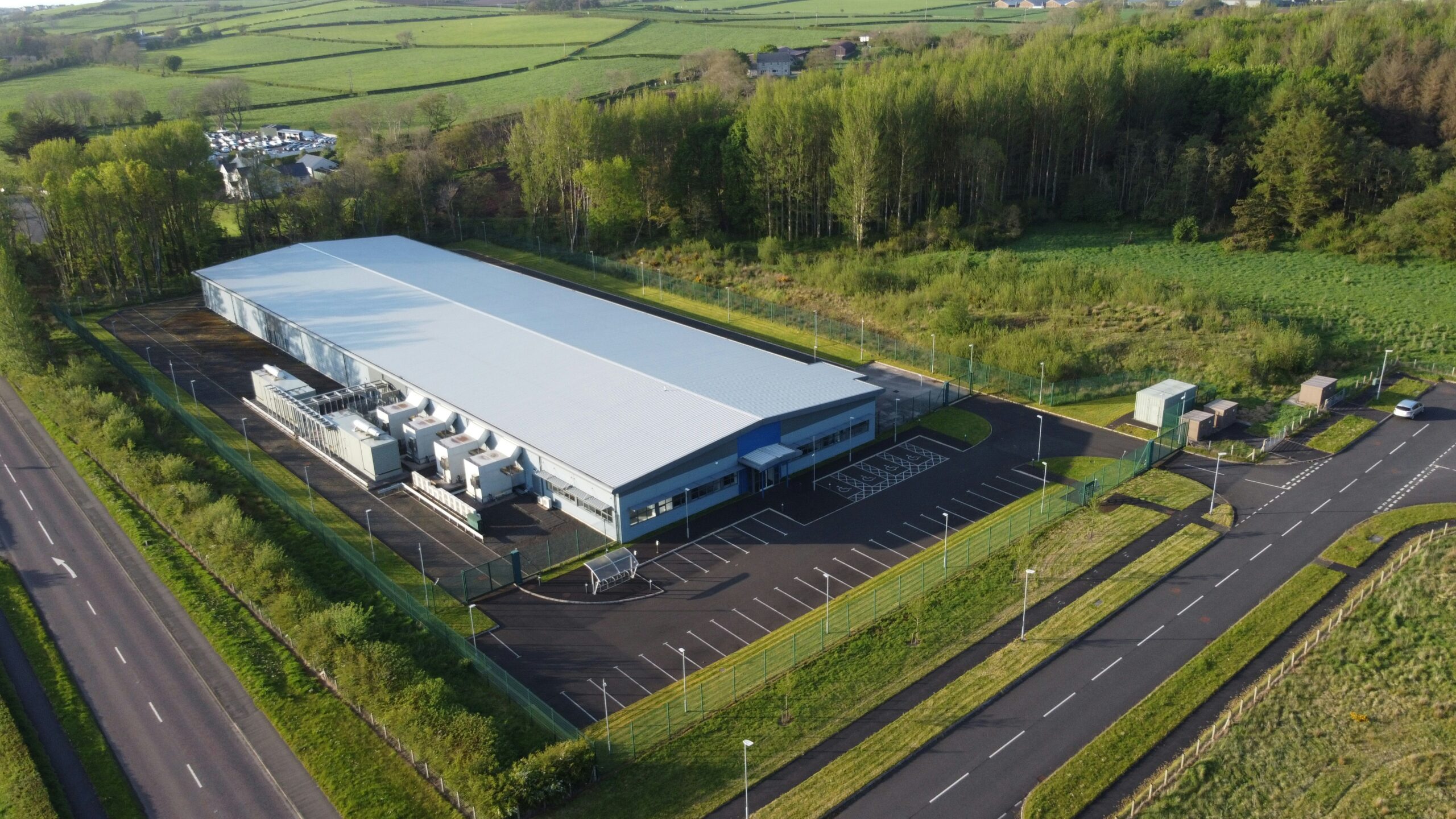
A new UN report has described Ireland as a “cautionary tale” of what happens when the rapid growth of Artificial Intelligence infrastructure outpaces energy planning.
Noting that data centres now account for 21% of our metered electricity demand. The report argues that AI’s global environmental impact extends beyond energy use and carbon emissions, highlighting growing pressures on water resources, land use, critical mineral extraction, and eventual e-waste.
The All Ireland Science Media Centre asked experts to comment.
Dr Nathan Quinlan, School of Engineering, University of Galway, comments:
“The most concerning dimension of AI energy use is not its current level, at around 20% of global data centre energy use, but its trajectory. It expanded by 50% in 2025, and the CEO of the dominant chip maker for AI claims the industry will ultimately need 1,000 times more energy than it is now consuming. That projection would see the sector use more electricity than the entire world does today. Misleading headlines, for example that making a cup of tea uses as much energy as 100 chatbot queries, do not stack up against the hard data for a ballooning, energy-hungry industry.
“Here in Ireland, data centres use 21% of electricity. This is proportionally a much higher load on our national electricity systems than in AI hubs such as the USA (4%) and China (1%), and is comparable with the state of Virginia, the world’s largest data centre hotspot.
“The CRU now requires data centres and other large energy users to generate their own electricity locally, making it available to the grid. They must also source 80% of their power from new renewable sources within 6 years of switching on. This mitigates some risks, but the CO2 emitted in the startup period will not go away after those 6 years. In the long term, the fossil-based 20% of unknown potentially very large power new demand may accumulate to very significant additions to national CO2 emissions.
“The new CRU policy only applies to datacentres that wish to avail of the national grid. One new centre in Dublin is going it alone with an onsite power station described as “the next chapter of AI infrastructure”. This “microgrid” is in fact an array of gas-burning internal combustion engines, essentially very large car engines, generating 90 megawatts – equivalent to almost 2,000 mid-size cars running around the clock at full throttle – enough to power 70% of the homes in Dublin city.
“We already have a steep hill to climb to build an energy system that’s compatible with a liveable climate and a thriving society, and become independent of volatile fossil fuel supplies. Ireland needs strong and purposeful decisions around our approach to this resource-intensive, aggressively expanding new industry that can potentially undermine our local and global efforts to avert the worst outcomes in the climate crisis.”
Declaration of interest: Nothing to Declare
Professor Hannah Daly, School of Engineering and Architecture, University College Cork, comments:
“Many of the narratives that AI and data centres are supporting sustainability and climate action remain unproven. AI is driving an unprecedented surge in power demand, and is largely growing with fossil fuels. The largest AI data centres being constructed in the US, for example, will consume as much electricity as a city like London. Ireland presents a cautionary tale. Power demand from data centres has placed significant strain on power infrastructure, and now, is working against efforts to meet legally-binding climate targets.
“The challenge is that renewable energy only delivers climate benefits when it displaces fossil fuel use. If renewable generation is simply absorbed by rapidly growing demand from data centres, emissions reductions are delayed as fossil fuel demand persists. In Ireland, growth in data centre electricity demand has broadly kept pace with growth in renewable electricity generation, meaning that much of the additional renewable capacity has not translated into lower fossil fuel use.
“Data centres for AI applications in particular are now so energy intensive and place such pressure on the electricity grid that they often have to be built with on-site fossil fuel plants. A requirement that data centres finance renewables projects will largely not offset on-site fossil fuel or its emissions. This trend and weak environmental regulation is eroding Ireland’s progress in cutting fossil fuel dependency and meeting legally-binding carbon budgets.”
Declaration of interest: No competing interests to declare
Dr Nick Scroxton, Research Fellow, ICARUS Climate Research Centre, comments:
“Ireland, and Dublin in particular, is creaking at the seams for both electricity and water supply. Demand for water frequently exceeds supply in Dublin and Uisce Eireann already takes 40% of flow in the Liffey for water use. New data centres for AI risk stressing both these systems at the financial and physical detriment of the population, as well as undoing the progress we’ve made on our existing renewables. The years of delays in our planning system that results in a lack of offshore wind generation limits the electricity grid’s ability to absorb data centres, and results in more fossil fuel use. Similarly, delays to the River Shannon to Dublin pipeline do the same for water supply. AI and the increased use of data centres has come at the worst possible time for Dublin.”
Declaration of interest: “No conflicts of interest. I receive funding from the Sustainable Energy Authority of Ireland.”
Dr. Fiona McDermott, Research Fellow, CONNECT Research Ireland Centre for Future Networks and Communications, Trinity College Dublin, comments:
“This report on the environmental footprint of AI infrastructural developments is welcome in highlighting the significant trade-offs at play and the urgent need to consider the wider associated environmental and societal costs. It is especially prescient in the case of Ireland, where the country is set to implement substantial policy changes such as the Large Energy User Action Plan, to facilitate the further expansion of the data centre sector. It rightly features Ireland as a cautionary case of unchecked data centre development, whereby data centres used 21% of the country’s electricity last year, more than all urban homes combined.
“This growth in energy-intensive demand and the associated increase in emissions has serious implications in undermining the progress in decarbonising the country’s electricity supply. While in addition, new research highlights the first-hand social justice issues that data centres are contributing to in Ireland, including evidence of how the energy demand of datacentres is adding hundreds of euros to domestic electricity bills at a time when people are grappling with a cost of living crisis, as well as the fact that the majority of data centres are concentrated in economically-deprived communities.”
Declaration of interest: “I don’t have any declarations of interest relevant to this topic.”
Professor Andrew Parnell, Met Éireann Professor of Data Science for Climate and Weather, University College Dublin, comments:
“This is a very concerning report that adds to a growing list of articles pointing out the potentially very negative impact of AI. I think we do need to separate out different forms of AI to avoid equating some of the very large language models, which have enormous carbon footprints, with those of smaller AI models which are used for specific tasks in data analysis such as Machine Learning.
“For example, the new AI weather forecasting models that are being produced are estimated to be more accurate and 1000 times more efficient than the traditional physics-based weather forecasting models that we run on a daily basis. Were we to stop the development and implementation of these models alongside a larger moratorium on AI data analysis or data centres, we would be losing an opportunity to reduce the environmental impact of these large computer weather forecasting models.
“More generally, we need to think about what these AI models might replace and whether that is likely to lead to a longer term net benefit or not. We must also compel AI developers to release the emissions impact of the models they are training so that users and policy makers can make informed decisions about their use in society.”
Declaration of interest: None received
Dr Yvonne Ryan, Associate Professor in Environmental Science within the Department of Chemical Science, University of Limerick, comments:
“The scale of data-centre-related e-waste in Ireland is largely unknown because much of the equipment is owned and managed directly by the operators rather than being placed on the consumer market. However, high-end servers and computing equipment are very different from the electronic products that typically dominate e-waste streams. They contain significant embodied value, are designed to be highly durable, and are often remanufactured, refurbished or reused multiple times, either by the owner or specialist third parties. As a result, it is highly unlikely that this type of equipment ends up in Ireland’s conventional e-waste collection system. Currently the biggest challenge for e-waste management tends to come from lower-cost consumer electronics, like vapes, and other household gadgets that contain batteries, which are discarded far more frequently, are much harder to recover and reuse effectively and can cause fires in waste collection facilities. “
Declaration of interest: “No conflicts”
Professor Colin Fitzpatrick, Centre for Sustainable Digital (Re)Manufacturing, University of Limerick, comments:
“The management of used items from data centres is usually conducted in a highly professional manner and is actually one of the most functional aspects of the circular economy with regards to electronics. This includes secure data sanitisation and very high levels of refurbishment and equipment reuse, this helping to bridge the digital divide while conserving critical raw materials and embodied energy. Nonetheless, this equipment will eventually become end of life and care should be taken that it is recycled in a safe and efficient manner”
Declaration of interest: “No conflicts”
Professor Rohit Nishant, Department of Information Technology, Analytics, and Operations, Queen’s University Belfast, comments:
“There are several key takeaways from “Environmental Cost of AI’s Energy Use: Carbon, Water and Land Footprints,” by the United Nations University Institute for Water, Environment and Health (UNU-INWEH).
“But two takeaways stand out. First, there is a need to look beyond the carbon footprint and consider water and land footprints when assessing the sustainability and greening of data centres. Several technology firms are investing in data centres, and the focus is on the high energy consumption of these data centres. Technology companies are highlighting their investments in renewable energy to reduce the carbon footprint of data centre energy consumption. The report emphasizes that a low carbon footprint is not the same as a low water or land footprint. Even with a switch to renewable energy, renewable-powered data centres could have large water and land footprints. So, when assessing whether a data centre is green or sustainable, one also needs to consider the water and land footprints of energy production, not only the carbon footprint. Policymakers and governments need to consider this aspect when deciding on a data centre strategy for their countries.
“Second, the report highlights the environmental crisis that these multimodal generative AI tools can cause. People are increasingly using generative AI to create videos; many use these tools for fun and entertainment, such as generating a video of a cat wearing a hat. But this has a huge energy footprint. Moreover, the AI infrastructure required by these tools can lead to a huge e-waste crisis down the line. There is a need to make users aware of the environmental footprint of these tools and to nudge them to use them judiciously and to use concise prompts. Since the environmental footprint of AI is not as apparent as, say, a car running on fossil fuels, there is a need to educate the public about AI tools’ environmental impact.”
Declaration of interest: “No conflicts of interest.”